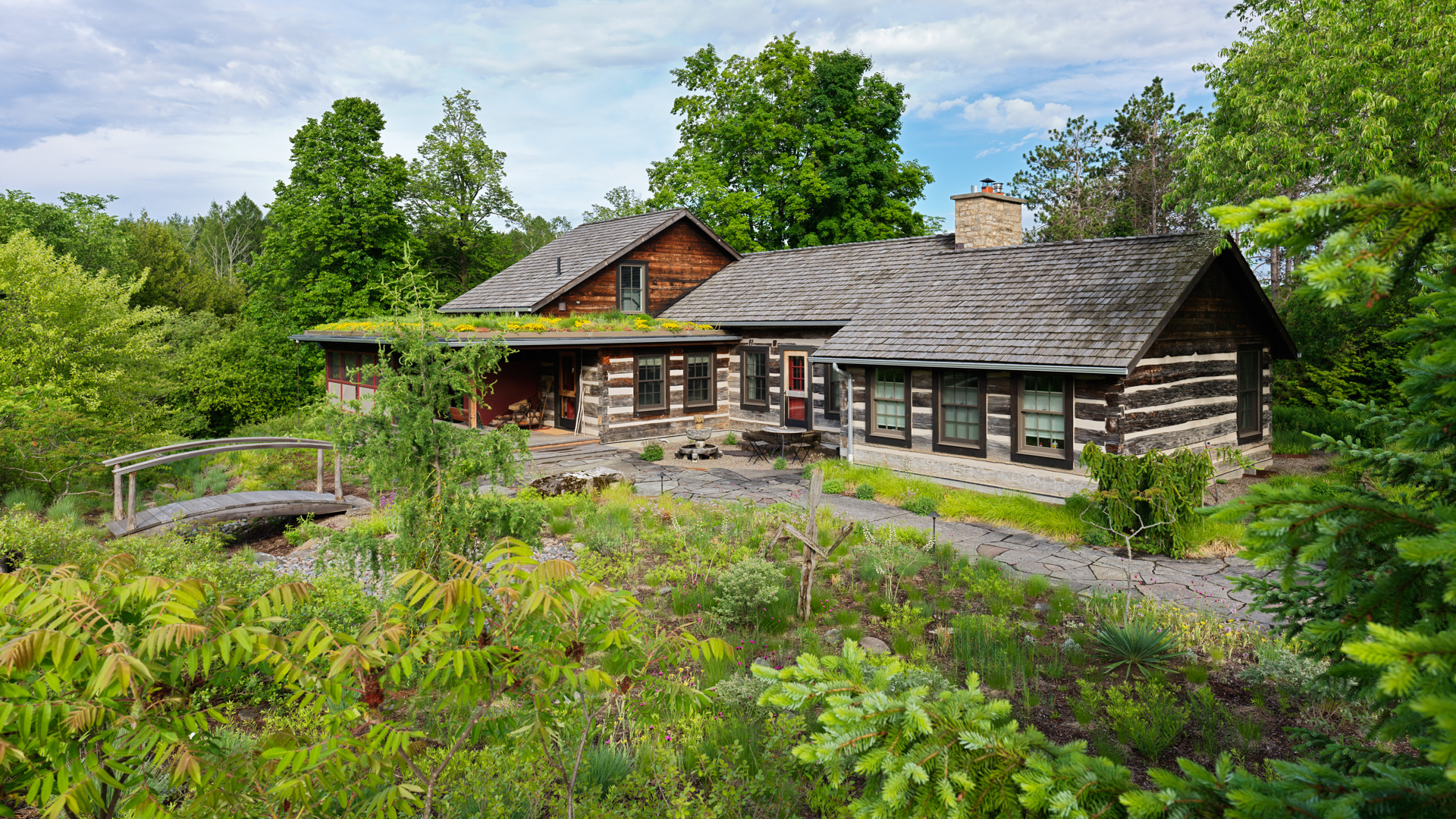
In the summer planting issue of Gardens Illustrated, The New Perennialist explains how he created his Canadian garden and exciting new-alvar-inspired green roof with year-round interest in the wilds of Ontario.
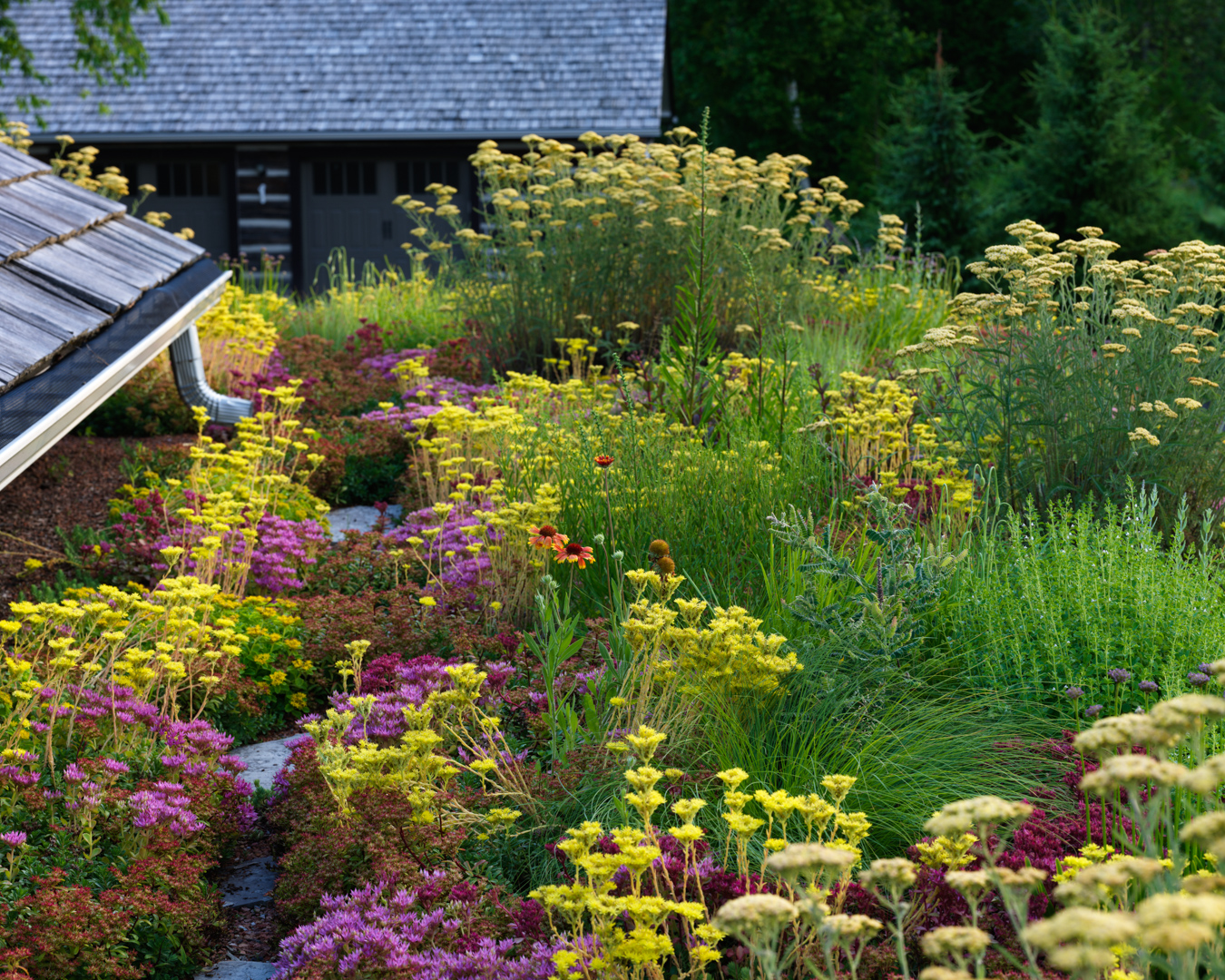
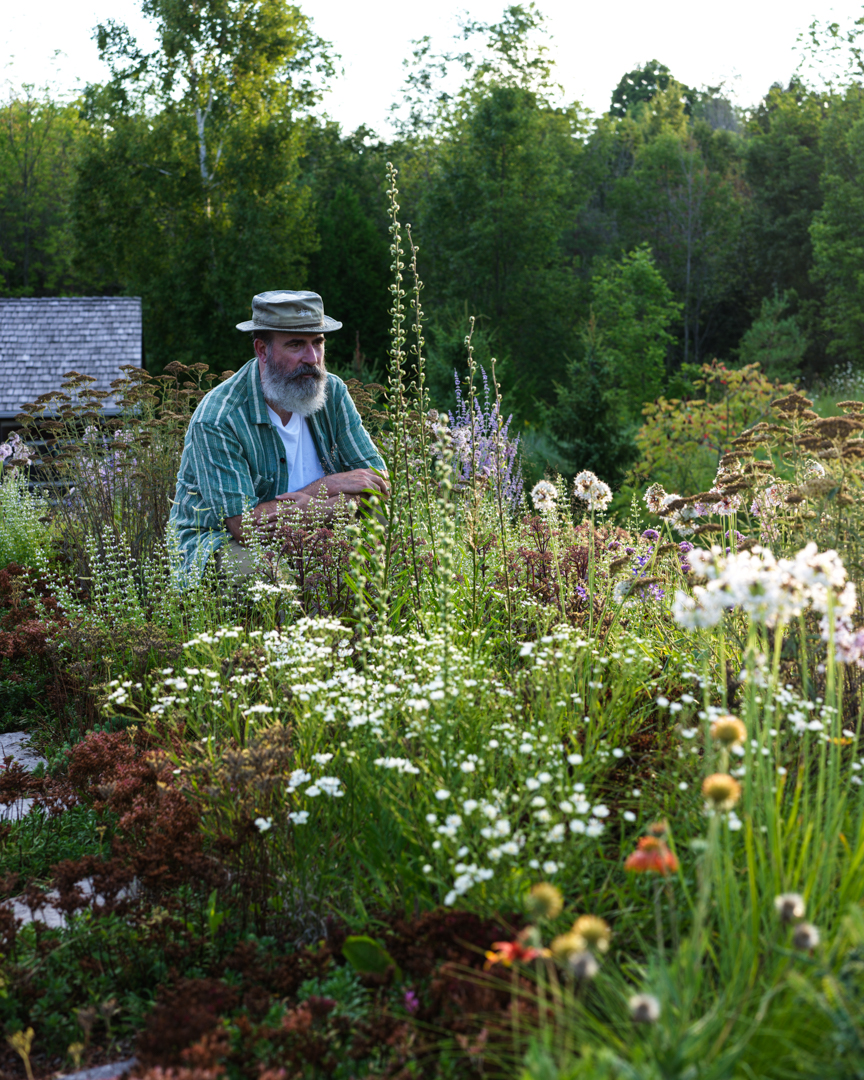 It’s early June in Southern Ontario and the flat strip of roof right outside my picture window has already launched into the first stage of a five-part micro-superbloom. The hyperreal colour palette of the multispecies sedum matrix shifts through the spectrum from an orange glimmer, acid yellow, shocking pink, silver-blue and garnet, and sometimes I think may be visible from space. And that’s just the opening act.
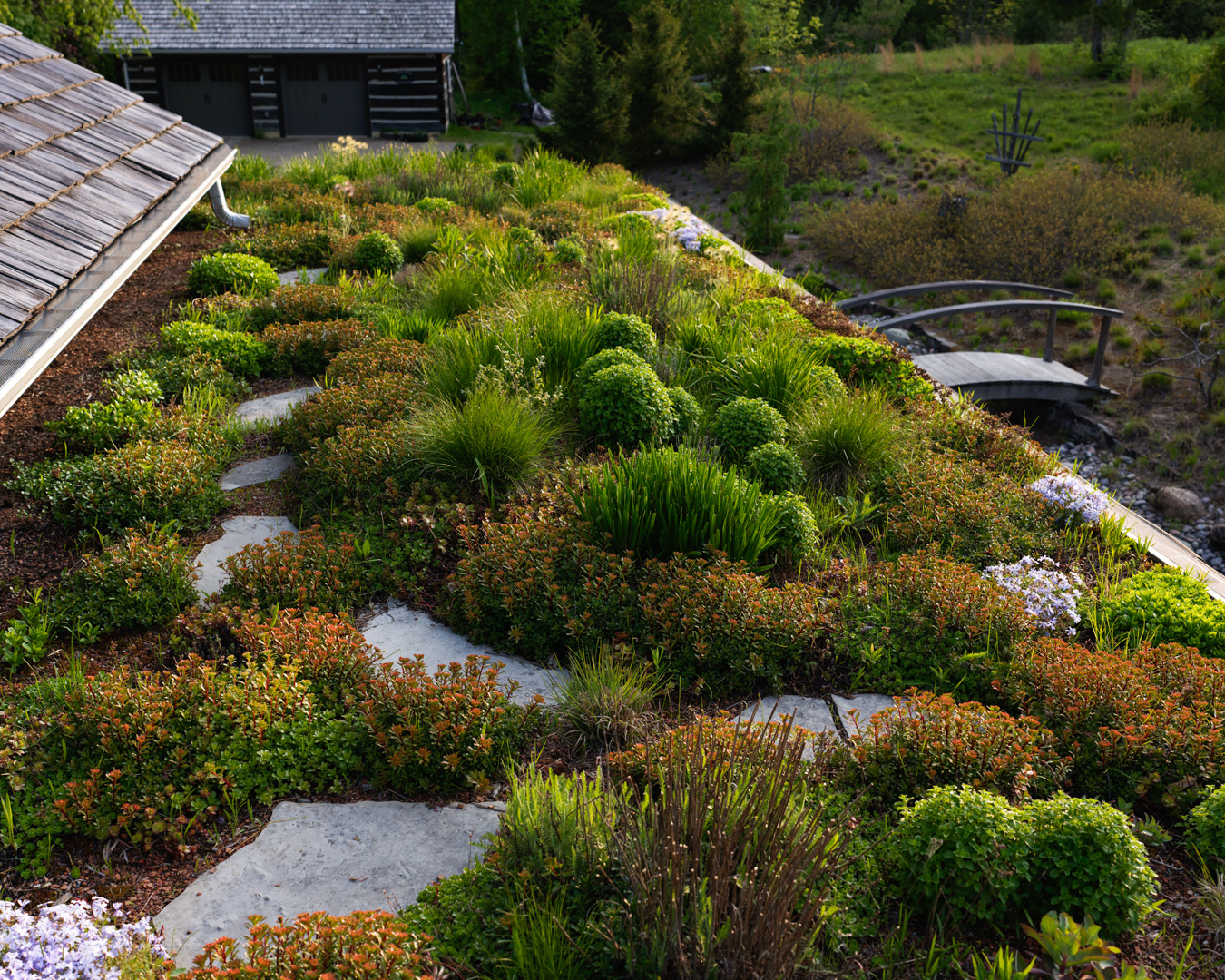
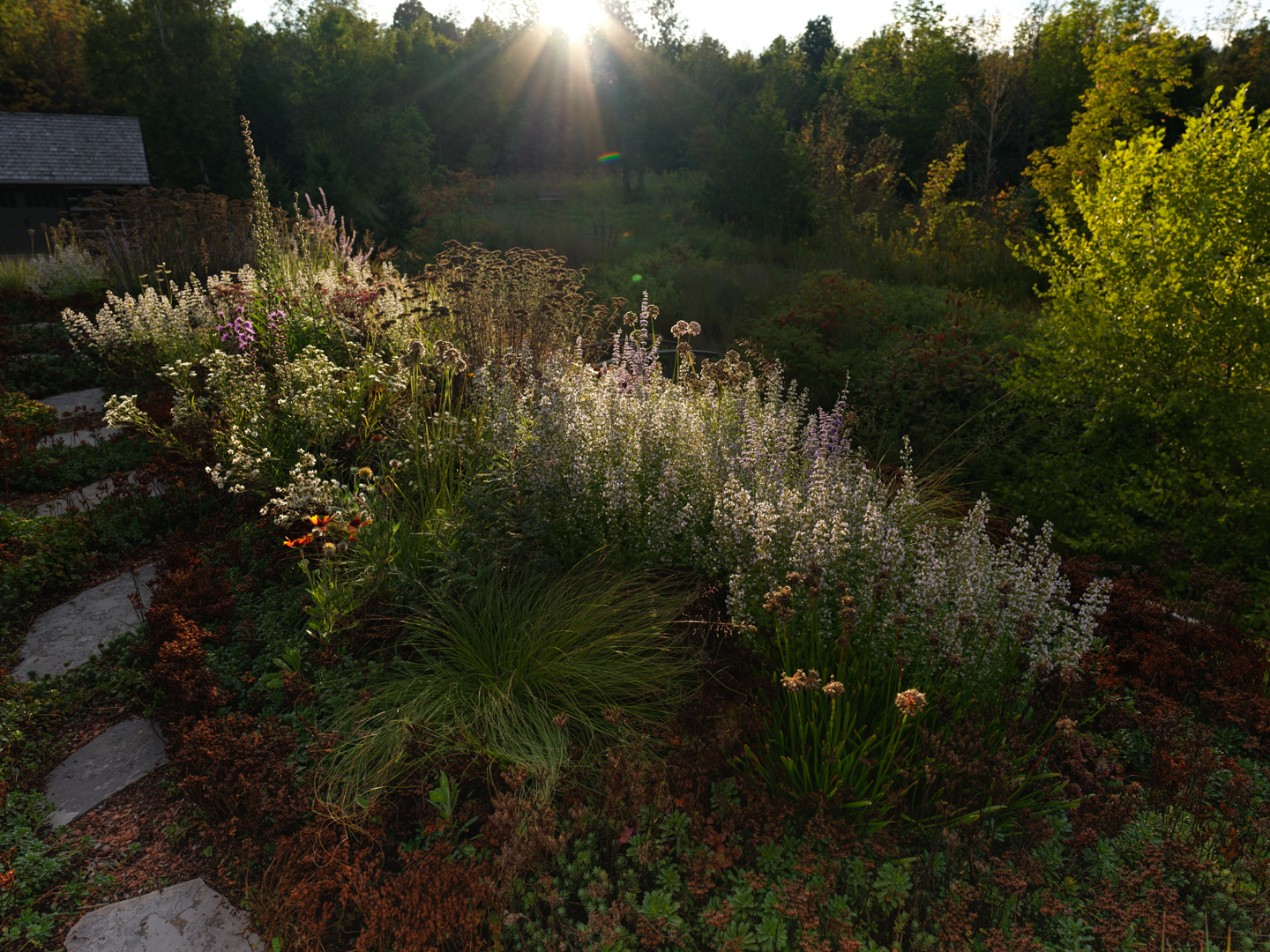
The next round of interlaced mosaic plantings are preparing for lift-off in a series of five tapered mounds that extend around the corners of the rectangular roof. Starting in midsummer, each mosaic opens like a chrysalis to form constellations of grasses, subshrubs, and perennials. It’s always a surprise to realize this is happening in only 10-15cm (4-6″) of recycled brick substrate and on top of a 200-year-old log cabin.
It turns out that a green roof can come in almost any other colour than green.
Looking good is just the shiny surface. The Extensive Green Roof (EGR) system must be able to stand up to the elements in the whipsaw extremes of our northeastern Canadian climate, flipping from searing summer heat to ice-block winter freeze-ups. Toss in the zany mood swings of climate-change and the formidable design challenge becomes finding the plants tough enough to survive the ride.
Frontier life
Our log cabin has come a long way since its pioneer days, but even now, with all mod cons, it still feels remote. My wife Troy and I see far more wildlife than humans on our 30 acre property hidden away in the post-glacial terrain of the 450-million-year-old Niagara Escarpment, now a UNESCO World Biosphere Reserve. The city of Toronto with its 6.5 million inhabitants is less than an hour’s drive from here but might as well be a million miles away.
Any sense of isolation falls away on golden afternoons in July where I can step out on the green roof and feel my ankles abuzz with low-flying clouds of wild bees, hoverflies, wasps, bumblebees and butterflies, irresistibly drawn to the nectar river on tap from summer through autumn.
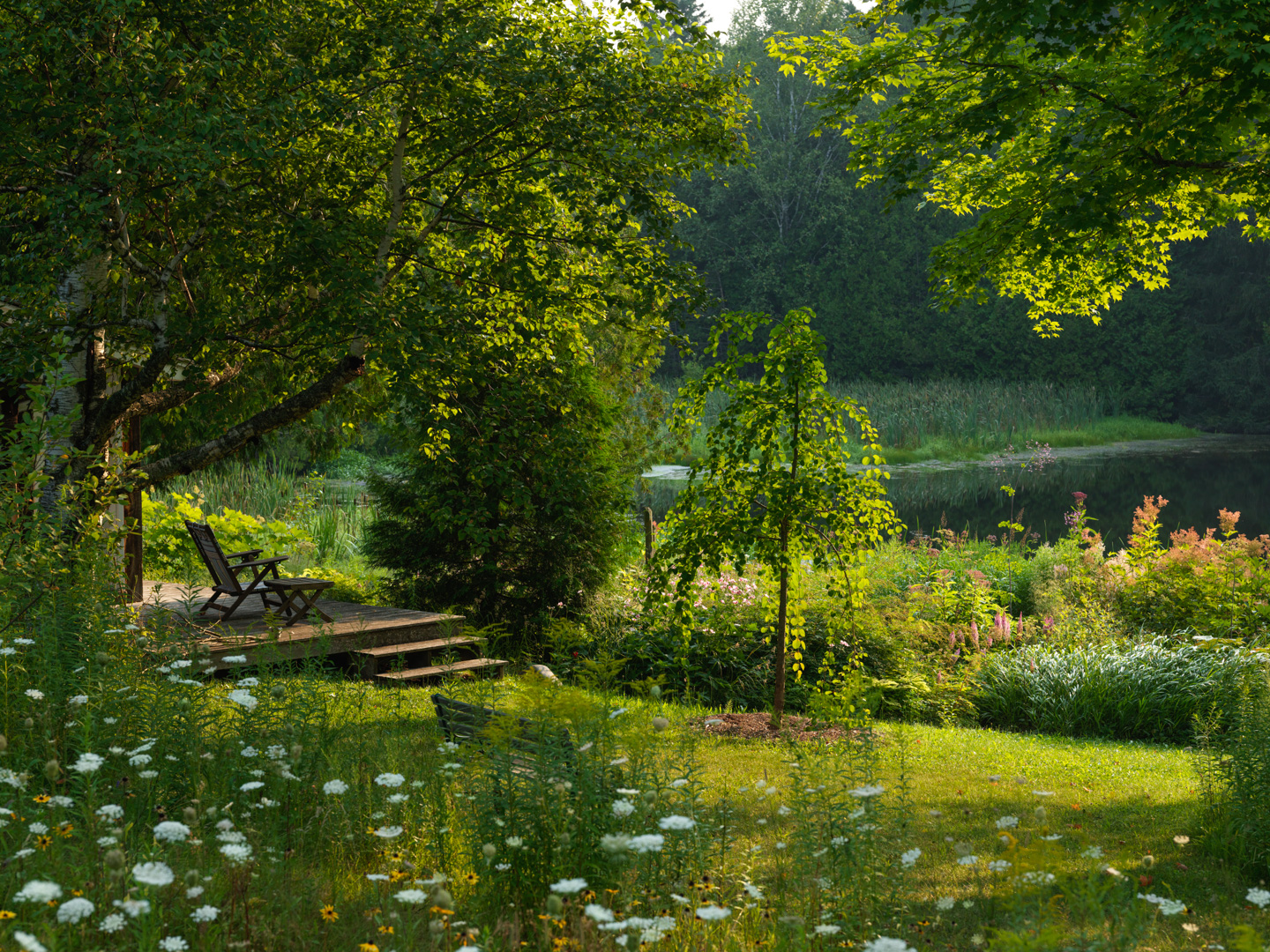
From the roof, I can also take in the entire bird’s-eye view of a panorama sweeping down across the landscape. When we first moved here from the city in 2014, it was a golf-course sized expanse of lawn with parkland trees. The vista now features a lush belt of prairie grasses and rough meadow. A path winds through it to the woodland edge of a one-acre pond, where I created my first planting.
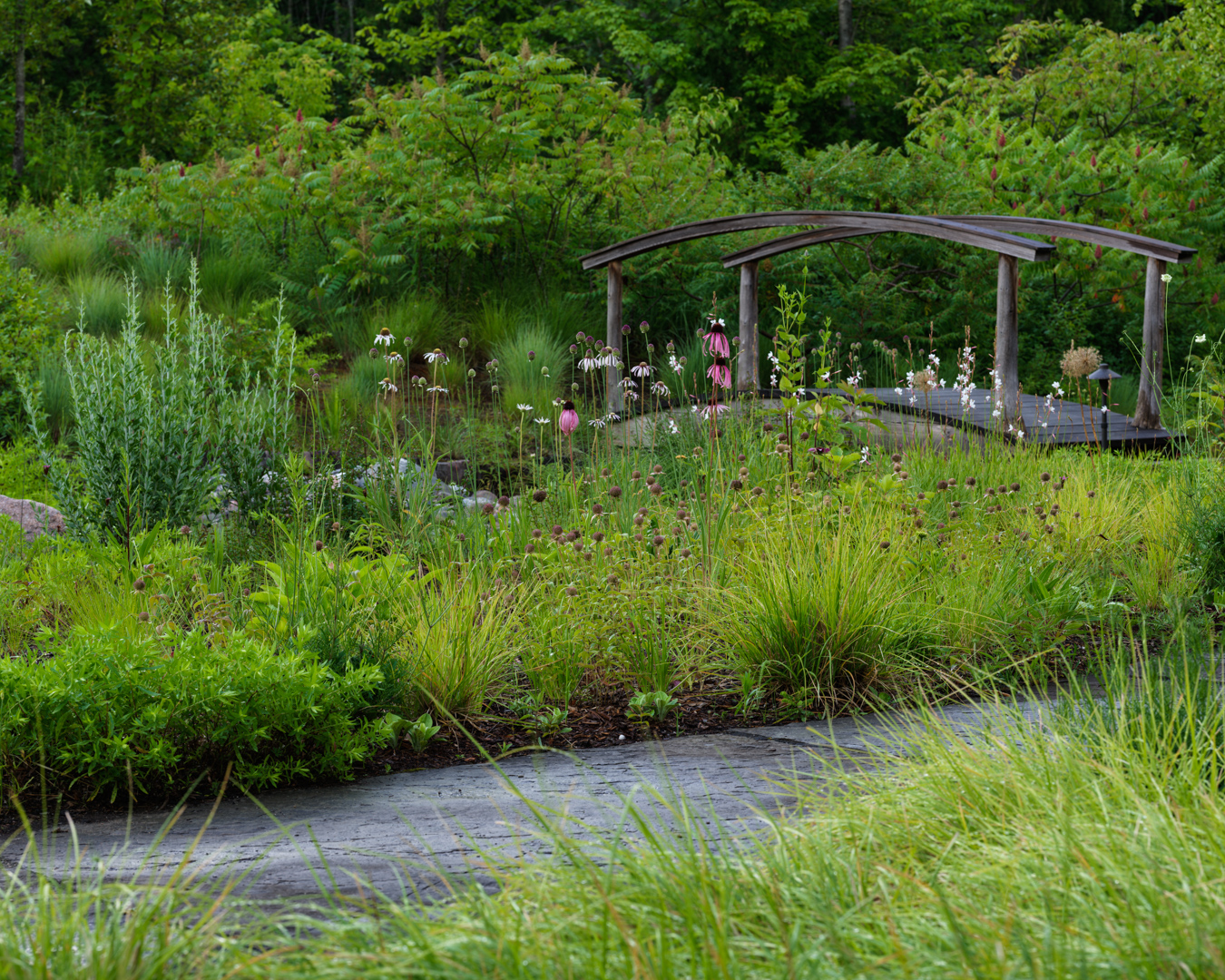
The New Perennial pond garden is sited on the near bank, beside a small guest cabin. What was once neglected scrubland is now a wild-ish wonderland, home to a dizzying array of dragonflies, salamanders, frogs, toads, snakes, turtles, bats and birds. As dusk falls, the local coyote pack in the nearby forest will begin to yip and howl.
Set under the dappled shade of sugar maples, cedar, and paper birch, the pond plantings draw from a cosmopolitan palette of bioregional and introduced perennials, ferns and grasses, all selected to thrive in the moist to mucky ground. Primary inspiration flows directly from Piet Oudolf, whom I came to know alongside Noel Kingsbury while attending their first workshop in planting design held at Hummelo in 2013. When I started my pond project three years later, Piet kindly advised on the planting design, an offer impossible to refuse. He also introduced me to the US nurseryman Roy Diblik, who taught me the practicals of making “field adjustments” to help transpose my plans on paper to the reality of the ground.
Canada dry gardening
On the northwest side of the house is the Northern Sand Garden, framed by a Pleistocene era slab walkway, leading out to a long gravel drive. Planted in glacial outwash in 2018, this stylized dry prairie is the opposite of the Pond Garden, ‘sporobolized’ with grassy matrix plantings. It rises up the slope to meet thicketed shoals of Rhus aromatica ‘Gro-Low’ and Rhus typhina ‘Laciniata’ interspersed with seeded patches of Schizachyrium scoparium (little bluestem) to hold the sandy ground. The design influences here are Cassian Schmidt’s New German Style meets Swedish ‘sandman’ Peter Korn, but with my own Canadian spin.
Each major hardscape element plays a functional role in a green-blue infrastructure that kicks into gear during extreme weather events. The green roof plays first responder, positioned to slow and capture stormwater from the roofs above, with overflow diverted via rain chains and downspouts into a bioswale at ground level, with another grass matrix rain garden snaking down the hill.
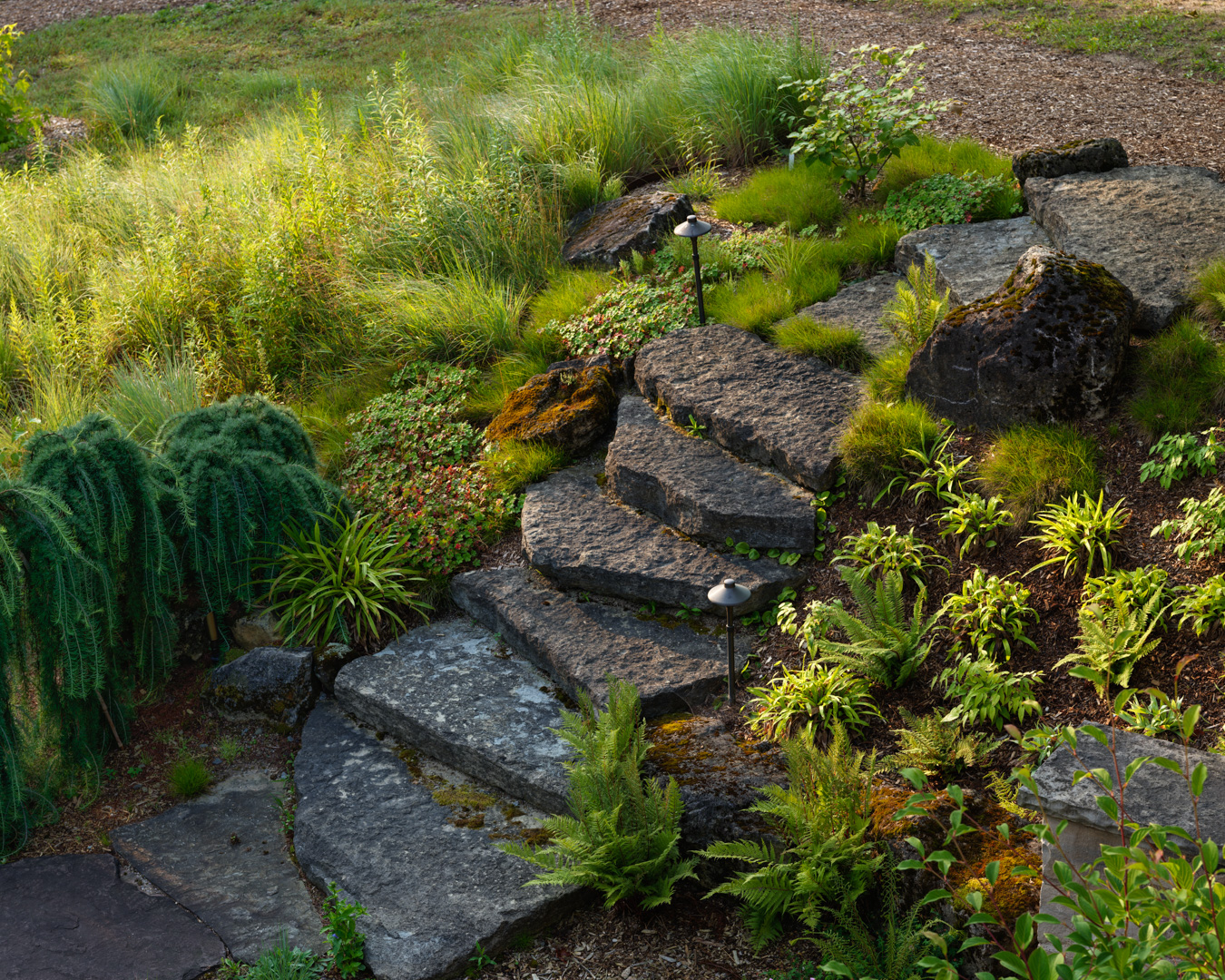
On the east side there is a courtyard framed around the ring of a central firepit, which stares skywards like an all-seeing eye. This Zen-like space shelters multi-stem specimens of Stewartia pseudocamellia and Acer x pseudosieboldianum First Flame, both going technicolour in fall. On the far side, a set of raw limestone slabs climb the boulder-strewn slope beside a contemplative fern garden, intermingled with Carex and Epimedium species, all growing in the shade of a characterful Acer saccharum.
On the southside of the cabin just out of sight, two sunny island beds called The Ovals are my attempt to distil New Perennial-sized oomph into a domestic-scale pollinator nirvana. My design influence here was another ally, the late, great Nigel Dunnett, who suggested using William Hogarth’s painterly ‘line of beauty’ as a visual cue to kickstart the initial flow of a planting.
Each of these five gardens lives within their own distinct microhabitat with ultra-specific plant selections matched to create corresponding designed plant communities. What started off growing by the pond has since climbed the hill to play in the sand, take a spin round the fire pit and dance from the rooftops. All one can do is smile and let the plants lead the way.
All year roof
The green roof presented the steepest learning curve of all the spaces in my garden, and was conceived by me and Toronto architect Andrew Jones as part of a masterplan to build a new extension to our cabin.
Our first move was to consult with a structural engineer to determine site logistics and load capacity for an Extensive Green Roof (EGR). For the installation, I chose to go with a multi-layered green roof system manufactured by ZinCo in Germany, which stacks up like a sandwich with an impermeable rubber mat on the bottom and 10-15cm of crushed brick substrate on top, with filter sheets between. The core of the system is a recycled plastic dimpleboard designed to hold water, which allows plants to hydrate while any excess drains out below.
I modelled my planting design concept on a rare planetary habitat known as ‘alvars’ that naturally occur here in Ontario, but may also be found in the northern UK, Sweden and the Baltics. These exposed environments are typified by lean gravelly soils on limestone pavement with severe conditions not unlike those found on a green roof.
After making this connection, I studied the taxa of local alvar plant communities to identify which species might anchor my designs. Next, came a deep dive into the latest research and plant trials for EGRs, which remain curiously unexplored in terms of planting design beyond the usual roll-out sedum mats.
My solution was to improvise a form of designed novel ecosystem across a series of five mounds with intermingled mosaic plantings, repeating with subtle fractal variations, to define the space. What launches it into the visual stratosphere is the addition of the jewel-like sedum matrix with psychedelic summer bursts followed by textural colour shifts that persist well into the fall.
As for maintenance, there is a certain amount of weeding of plants such as dandelions that blow in, and I now deadhead profuse self-seeders such as Allium cernuum, but nothing drastic. There is no irrigation system, but I spot hand-water during droughts and heatwaves.
I was surprised how quickly it developed. It’s year four, and the green roof planting has vastly outperformed my expectations in terms of its sheer toughness and ability to stand up to windstorms and extreme weather.
Made with love here in Canada, my alvar green roof is a concept without borders. A living prototype for a modern anywhere micro-garden of steely resilience in elevated plant-driven style.
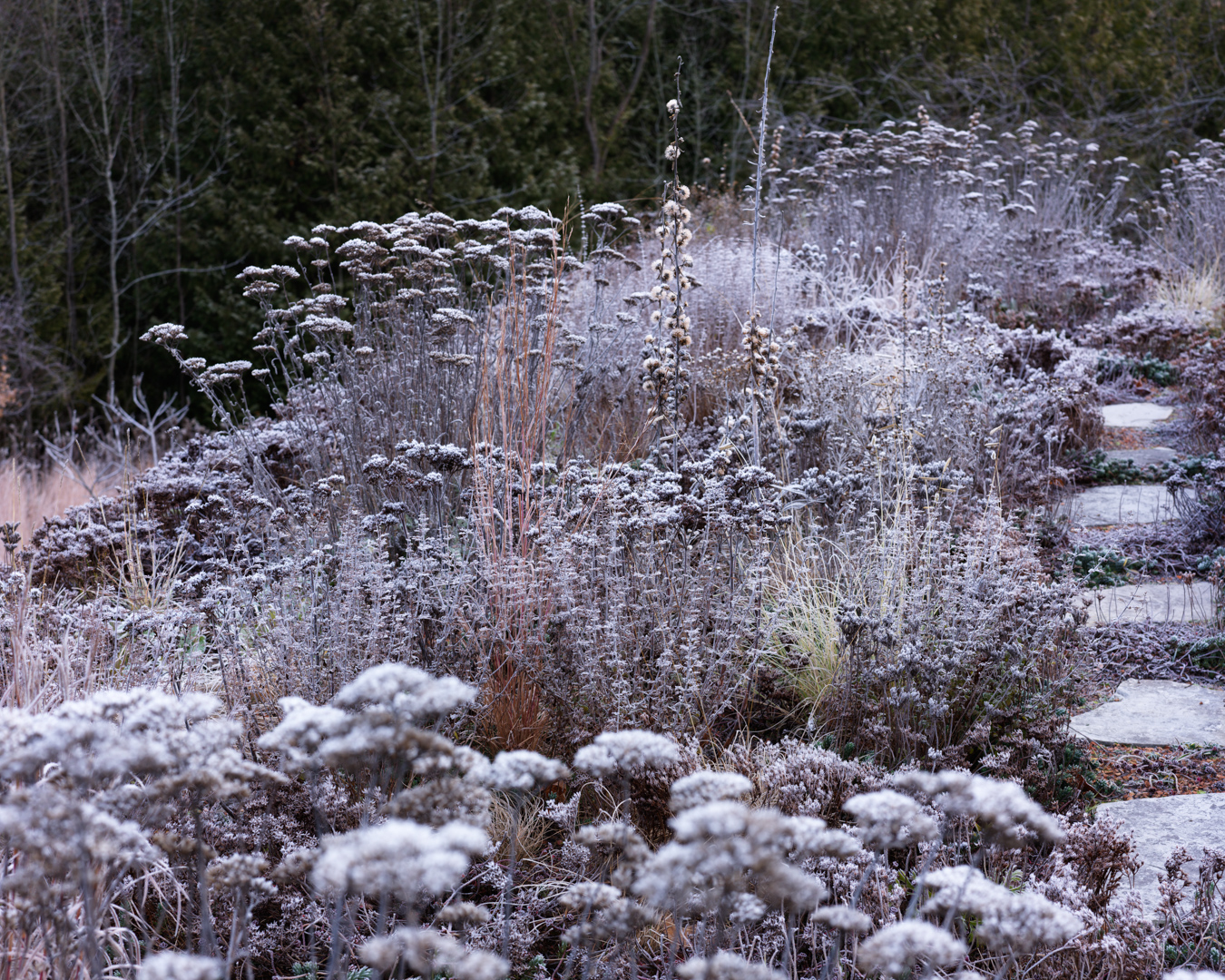
==
Note: This article appears in The Planting Issue of Gardens Illustrated Summer 2026 (issue 367). My thanks to Editor Stephanie Mahon, Art Director David Greenham, and the entire GI team. Pick up this superlative issue in North America at a newsstand near you.
Stunning, and I’m going to use your green roof planting to replace my front “lawn” on Vancouver Island.
I was going to call you out for referring to the Niagara Peninusla as the “wilds of Ontario” but I’m guessing that was Gardens Illustrated’s work.
Thanks! Good luck with your de-lawning. Oh yes, the “wilds” is a Brit thing for sure.
Fabulous, Tony. I WISH I had a green roof, but on my property, there is no room. So I tuck my colorful sedums here and there and all over the place. Your project is a true inspiration. I hope my own looks half as good as yours one day.
Thanks Beth. Yes, it certainly opened my eyes to the potential of Sedums, used in a matrix then combined with perennials and grasses.
Enchanting group – Liatris aspera /Salvia ‘Little Spire’ / Calamintha nepeta /Solidago ptarmicoides
Thank you!
Amazing! Congratulations on your feature in Gardens Illustrated magazine. It is fantastic that a Canadian garden has been featured. Do you ever invite people into your garden for a tour? I live in Manitoba but I would definetely travel to see a garden like yours. I feel that gardens inspired by Oudolf and the new perennialists are underdone in our country yet they are perfect for our climate. I would love to see more of them. Your green roof is stunning!
Thanks so much Yohanna, Yes, it’d be great to see more New Perennial inspired gardens across Canada because it can most definitely be tweaked to fit the character of our landscape and culture. I do have garden clubs come visit the gardens here through the summer and I sometimes open it up to my Instagram followers for weekend visits by registration.