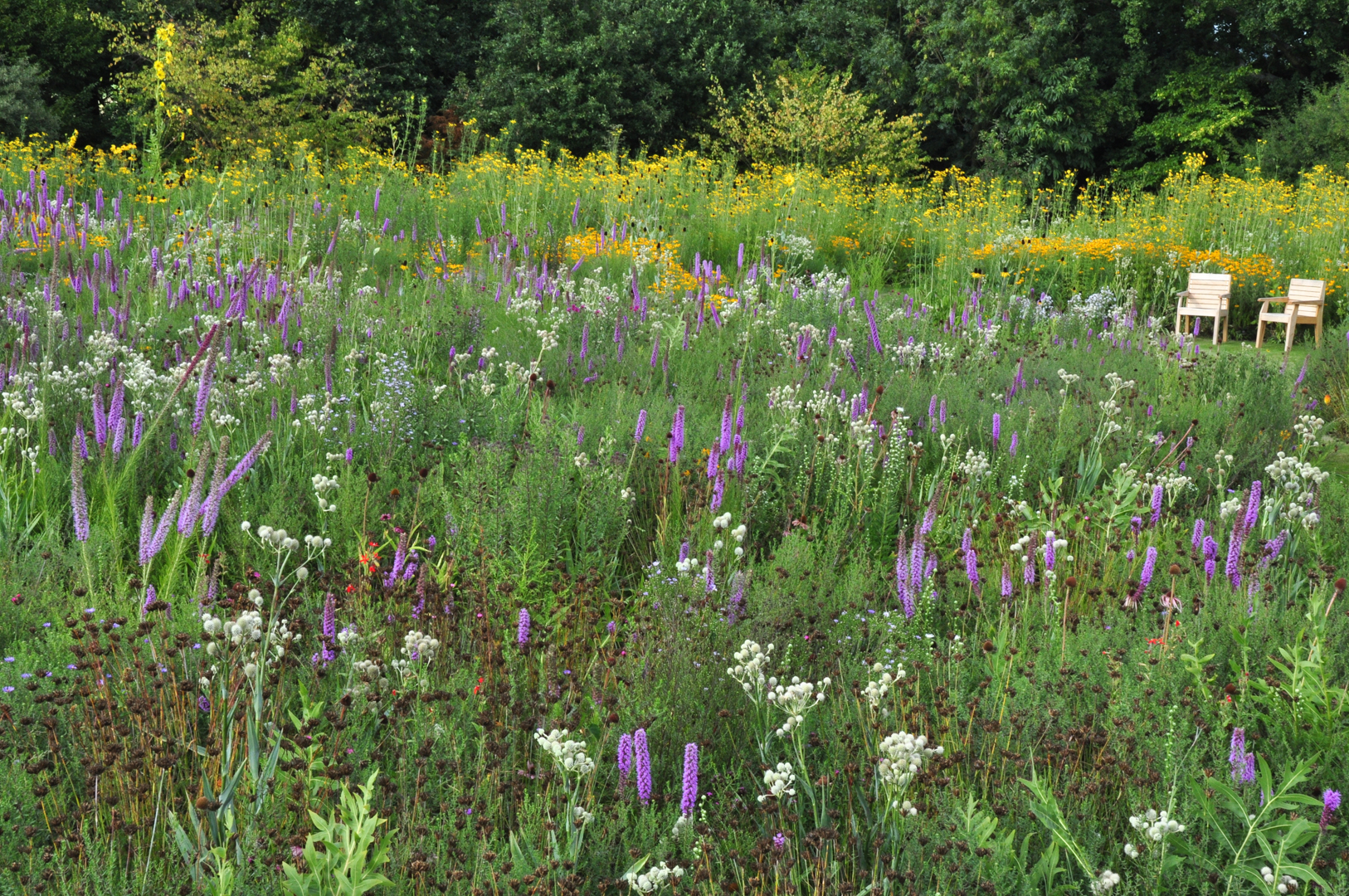
Here’s a touchy topic guaranteed to spark debate in garden chats on both sides of the Atlantic.
Often with polarized positions taken by one side or another with zero room for compromise.
Or maybe, just maybe, there’s the beginning of a hairline crack, a fissure in the wall.
As recent guest on US podcast Growing Greener, Professor James Hitchmough ever so politely weighs in on the ecological benefits of using both native and non-native plants in urban environs.
Plant phreaks will know Hitchmough as a leading figure on the frontiers of horticultural ecology linked to the Sheffield School in the UK. He crossed the pond recently to speak at PLANT-O-RAMA 2026 in Brooklyn on the topic of ‘Evaluating the Complexity and Diversity of Designed Herbaceous Plantings’.
Podcaster, author and native plant advocate, Tom Christopher attended the talk and was one of those in the audience who were intrigued, stimulated and admittedly challenged by Hitchmough’s provocative ideas.
Stock in trade for the man below.

Apparently, the professor suggested among other things, that maybe there’s room for a more nuanced conversation about the strategic use of native & non-native plants in designed plant communities to more effectively support insect and garden ecology. He makes a compelling case for a non-dualistic approach where plants are critically selected for performance and not just provenance.
In the podcast, Christopher responds by presenting the consensus view in the US – underlining the essential role of native bioregional plants, and especially specific trees and shrubs as the foundational base for animal food webs. It’s the famed Prof. Doug Tallamy doctrine where trees serve as uniquely co-evolved larval hosts for countless species of Lepidoptera, which in turn, provide a high protein food source for nesting songbirds to raise their young.
Hitchmough strongly agrees but points out this is not always exclusive, citing a recent US study (led by Doug Tallamy) that charts how some herbivorous invertebrates have in fact, expanded their palette to include non-native congeners (often different species from the same family). While this is potentially a significant development when some indigenous populations are increasingly threatened, the study concludes that this new evolutionary transition is not happening fast enough to keep up with stressors like climate change. The authors therefore recommend curbing the use of non-native plants as “a necessary way to lessen insect declines”.
That’s an interesting conclusion. So, if…
Time is of the essence
We can all agree that the dual crises of climate change and species loss are casting a long shadow over ecological decision-making.
In the same spirit of timeliness, Hitchmough suggests, if the goal is to supercharge invertebrate biodiversity, then let’s open up our options in strategizing for public spaces. We can accomplish this for example, by combining specific native and non-native species to expand nectar and pollen resources for insect pollinators.
It’s a win-win strategy to flower-maxx for diversity by extending the phenological window as long as possible.
What’s more, Hitchmough suggests, we can massively widen our ecological scope by also considering the roles of other essential invertebrates like detritivores, composers, and parasitoids, where the nativeness of plant material is immaterial. Start by building higher levels of structural and spatial complexity into our designed plant communities and this plays out to the benefit of all.
Hmm. That makes a whole lot of sense. Meanwhile back in the podcast, the genial host admits to being flustered by Hitchmough’s liberating approach. I think he expected Hitchmough to take a position on one side or another, rather than embrace both.
My takeaway is this: When looking for more timely solutions, maybe it’s not simply a question of either/or. We also have the option to shift towards a more pluralistic strategy by using the “and + and ” approach to create more and more biodiversity. Moreover, it’s all flexible based on our goals and objectives.
Yes, there are vast differences between landscape and garden ecologies in the UK and Europe compared to North America, but when the focus is on nature-depleted cities, Hitchmough points out they are actually more alike than different and facing many of the same issues.
James Hitchmough also looks at the whole native vs. non-native debate as relative. The towering monster confronting us all on a global scale is Big Ag, an entire mega-industry causing the wholesale destruction of vanishing natural habitat and poisoning the well for the entire food web.
Sitting here arguing about provenance and plant labels, the professor says, is a bit like “polishing the silver when the whole ship is going down.”
Wow. How do we not get that?
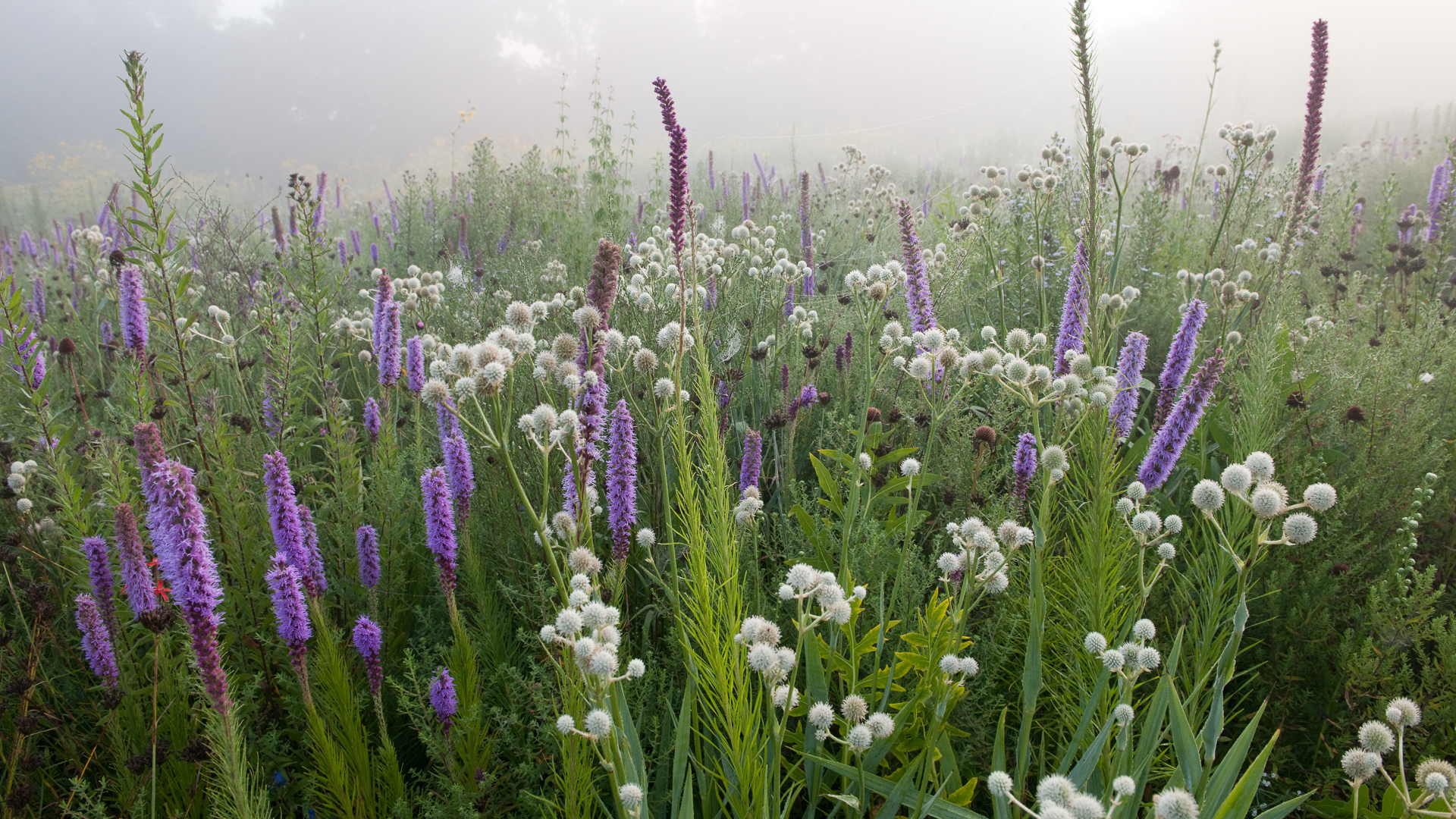
Cue outrage
I would have liked to have been a hoverfly on the wall of the Plant-O-Rama talk. The problem with Hitchmough is that he makes way too much sense. And that Geordie Northern accent is so damn charming!
From what I’ve seen, the social media reaction to the podcast is predictably split along party lines. The more international open-minded garden folks on my Dutch Dreams group on Facebook are nodding their heads in agreement. Meanwhile, hardcore nativists are extremely pissed that an outsider dares to suggest a different way to think about their microfauna and flora.
Their reaction tends to be shock and incredulity, furious and fruitless fact-checking to counter the logic, or moralistic flag-waving about colonial privilege.
I’m always curious to hear from friends on both sides. But in this case, as a Canadian with a sorta balanced perspective who grows both plenty of indigenous plants and also near and non-natives, I definitely lean towards the Middle Path of the Middle Powers. I see the rewards of a more cosmopolitan approach in my own garden explorations and the exuberance of life it can generate.
Ultimately, each to their own (but enough with the plant-shaming please).
Full marks to Tom Christopher for having the cojones to unwittingly open the lid to Pandora’s box on his podcast. Give it a listen at: https://www.thomaschristophergardens.com/podcasts/a-british-horticultural-ecologist-challenges-the-us-consensus
In more recent podcasts, efforts have been made to stuff the debate back into the box and as expected, it has not gone well.
More nuance please
One more thing. If you’re seeking yet more Hitchmough, his Designing with Randomness Masterclass stands up as the most inspiring high-level intro to ecological planting design I’ve ever seen. Far and away, it’s proven to be the most popular of my New Perennialist Talks to date.
Oh yeah. Every revolution should come with instructions, right?
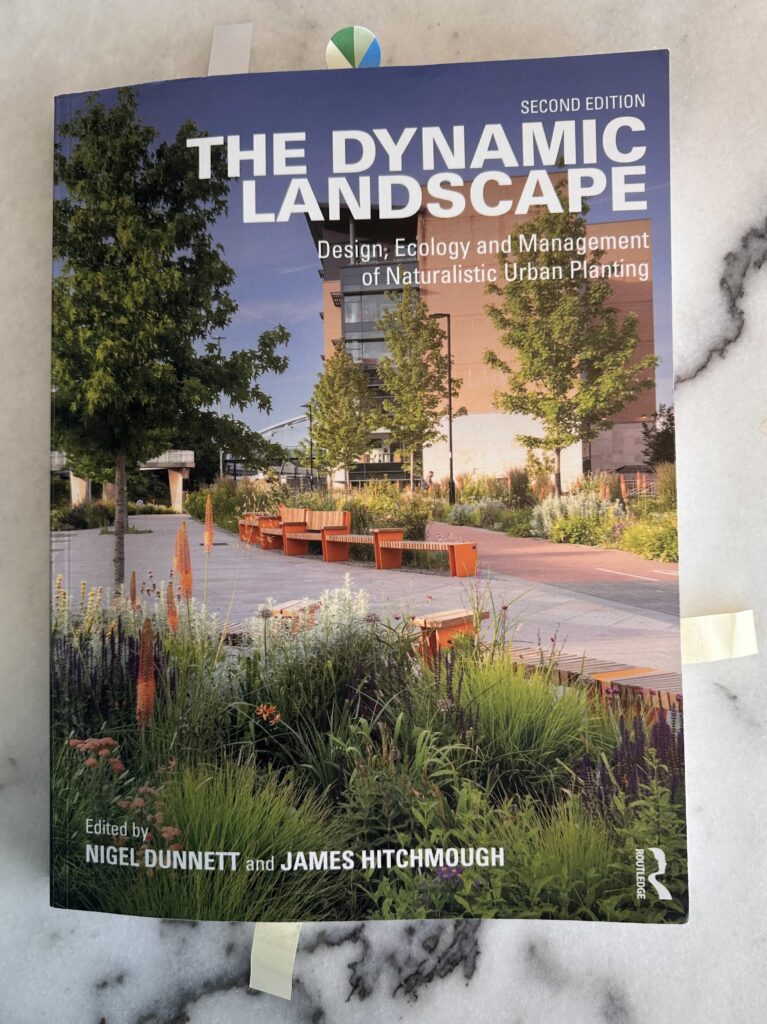
IMHO The number one book to read right now is The Dynamic Landscape: Design, Ecology and Management of Naturalistic Urban Planting (Revised second edition), edited by Profs. James Hitchmough and Nigel Dunnett, along with chapters by Claudia West of Phyto Studio, Henrik Sjöman on urban tree selection, and others. It’s as weighty as any textbook but packed with one brilliance after another, and highly recommended for serious plant phreaks, LAs, professional designers and ecologists.
Okay, so now spill. What’s your take on all this? (Meanwhile, it’s back to writing my book).
Tony, I will restate what I commented under Thomas Christopher’s post on Facebook.
I have James Hitchmough’s book ‘Sowing Beauty’ on my bookshelf. It’s a lovely text with lots of good case lesson gardens, including those he co-designed with Nigel Dunnett for the Olympics in which British native plants were specified. (One of my happiest tourism experiences recently was walking through the wildflower meadow Nigel Dunnett designed for the moat around the Tower of London, with a mix of bee-friendly plants from many continents. It is now being redesigned to focus strictly on British native plants). But many of Dr. Hitchmough’s illustrated gardens feature beautiful displays of North American prairie species and those from South Africa’s Drakensberg, including the Univ. of Oxfoord Merton’s garden and that of British designer Tom Stuart-Smith’s. And as he says in this excellent interview with Thomas, in his career he became puzzled by the anger around native vs non-native plants, since he wants to “support life” in his garden and has done research around studies in peer-reviewed journals detailing the rich biodiversity in designed gardens of native and non-native plants. In short, even though he’s intellectually interested (and very experienced) in “nativeness” of steppes, deserts, prairies, etc., he thinks there should be more “nuance” in this discussion. And he also points out that the *real* enemy is intensive agriculture, not growing non-native plants in gardens. Also as he says, to talk about this discussion in an international sense, “in one culture, the glass is half-empty; in another, the glass is half-full”.
I also have Doug Tallamy’s book ‘Bringing Nature Home’ in my bookcase, and I think of him when I see birds eating caterpillars in the many red oaks on the hillside at our cottage north of Toronto. I grow many native species along with non-natives (and I do enjoy seeing hordes of native bees attack my Japanese maple flowers in spring).
I also have Thomas Christopher’s book on Wave Hill, ‘Nature into Art’ on my bookshelf, in which he devotes several pages to the Elliptical Garden containing native plants.
But the most informative book on my shelf is ‘Nature’s Economy: A History of Ecological Ideas’ (2nd edition 1994) by Donald Worster, in which he traces the origin of the word “ecology”, first expressed in 1866 as a neologism by the German Darwinist Ernst Haeckel as “oecology”. Haeckel defined ecology as “the science of the relationship of living organisms to the external world, their habitat, customs, energies, parasites, etc.” It does not just mean biodiversity in a garden or the ability to attract pollinators; it is a specific science that relates to ecosystems, not designed gardens – which can be called biodiverse, but not “ecological”.
I live in a city, Toronto, that was cleared of forests over the past two centuries. What was here once is here no longer, except in fragments in our now degraded ravines (Norway maples, buckthorn). We can plant shade gardens with native plants here and there and in parks, for sure, but these are simulacrums of the continuous Great Lakes mixed forest biome that was here before being cleared, including by pre-contact indigenous peoples, for farming and development. As my dear friend, the late Toronto ecological restorationist, landscape architect, textbook author (Cities and Natural Process: A Basis for Sustainability, 1994) and Environmental Studies professor Michael Hough summed up the reality: “You can’t bring back the buffalo.” But we can certainly do a little here and there to encourage biodiversity. Just don’t call it Ernst Haeckel’s “ecology”!
I wrote about this philosophical conundrum in a blog several years ago called ‘The Siberian Squill and the Cellophane Bee’ on my website http://www.thepaintboxgarden.com.
And I’m looking forward to your book!
Hi Janet, Thanks for weighing in with such a thoughtful and I daresay, nuanced comment. And good on you to share it here. I actually heard from James Hitchmough that it was not his intention at all to stir the pot in his Plant-O-Rama talk. The nativeness point came up as an aside in the course of a much more detailed analysis on maxxing biodiversity. It’s something he knows a lot about and unlike some people, he totally walks the walk in terms of delivering naturalistic design at an extremely high level.
Love the whole of your comment and what I see as a balanced perspective. I also get your point about “ecology”, that terms gets tossed around with such flippancy, it’s hard to know what it means sometimes. Maybe that’s why the Sheffield school talks about horticultural ecology to frame it in the proper context without debasing it. Be patient for my book, not until summer 2027 if all goes according to plan but exciting nonetheless.
I live in the PNW and I’m trying to plant to fill all four seasons with flowers because insects and birds are active here all year. Native, non-native, varied flower forms… I’m hoping any and all nectar will help support insects until I can learn about “best” plants for this. I try to get flowering plants in beds, pots, under trees and in lawn areas- anywhere I can. We have weeds and tough, low, evergreen PNW groundcovers that need no summer watering or care we can grow instead of grass that will provide all four seasons of bloom and they always have insects in them. Larval host plants, plants for pollen specialists, loosening up maintenance practices…all this information adds a layer of depth to gardening to enrich the experience.
Interesting. You have a whole other challenge with the year-round temperate climate. From everything I’ve been researching lately, you’re on the right track with aiming to provide a continual feast of plenty with a mix of plants. It takes time and research to discover the top plants by region, well worth doing.
You know you’re speaking my language Tony. Nuanced. A poetic and beautiful word to describe a poetic and beautiful world. -MW
Ditto and vice versa, Marianne. I read your amazing magnum opus on GardenRant and it’s so important to present alternate visions to narratives steeped in dogma.
As a plant ecologist and gardener, I’ve embraced native plants in our landscapes (my hubby is also a plant ecologist).
But in our degraded urban landscapes, we need all the diversity that we can manage, with non-native species providing sustenance for pollinators and others.
What an informed perspective. I’ve been catching up on research on that very point. It’s hard to accept that our landscapes have shattered into remnants but perhaps that acceptance is the start of wisdom.
Tony, I fully embrace your Middle Path of the Middle Powers mindset.
I am a retired landscape professional, who tried to educate my clients about ecologically sound landscapes, and how important they are.
I now have a very naturalistic garden full of both natives, nativars and non-native plants. We took a lot that was covered with invasive noxious weeds, and one large Colorado blue spruce tree from having not one bug or bird when we moved in eight years ago to teeming with life.
I truly believe a well-rounded, mixed plant approach is the best way. It all depends on your location, climate and your access to plant materials.
Access to plant materials, especially native, is particularly difficult in rural areas. I have had to collect seeds, germinate and grow many of my own natives. They just simply are not available in nurseries around here. This is a huge stumbling block for many people wanting native gardens.
People also do not understand the challenges of site, soil, elevation, micro climate, and which plants will and will not grow in these specific situations.
Gardening is truly not one size fits all. It is extremely nuanced as you will know.
Thanks for everything you do for the cause. I love the Dutch dreams, Facebook page.
Hi Beth, It sounds like you’re embraced right back. You bring up many good points, the difficulty of sourcing appropriate plants in rural area and the uncertainties of dealing with site challenges, a point that seems to be often glossed over. Much thanks for your note of appreciation and see you on Dutch Dreams.
Hi Tony.
Thanks for the nudge towards the Growing Greener podcast: always good to hear Hitchmough talk. I am often reminded of just how very fortunate we are here in the UK to have such a horticultural lineage of gardeners, designers and ecologists, leading right up to today’s Sheffield School (your Hitchmoughs, Dunnetts, Noel Kingsbury, Ken Thompson etc etc) and far beyond. As a professional gardener, and one who has followed closely the naturalistic movement over the past 20 years or so, I do find the native/non-native debates fascinating. I have also seen the way common gardening, as a leisure pursuit, has expanded immensely into the spheres of ecology and how the Oudolf effect has kind of led us all to become more in tune with the science and the aesthetic of both plant ecology and natural landscapes. However, with the recent rise in rewilding, I do wonder at times if some kind of Nth degree has been reached in this regard, and as a result, we may well see the pendulum swing back to a place where people can once again enjoy garden making without having to obtain every book published by Timber Press, read every biodiversity report, or go back to Uni to study plant ecology!
Obviously the native/non-native debate has its differences, and relative importance, in different countries and situations around the world, but here in the UK, I think we’re kind of happy with it at the moment, certainly within the domestic garden. It is reported that, in the average UK garden, over 93% of plants are non-native, and the work of Jennifer Owen (mentioned by Hitchmough in the podcast), The Dixter Biodiversity report, Sheffield University’s Bug Report, the work of Ken Thompson etc, has shown that it has huge benefits to biodiversity, insect life and pollinators. Insects don’t carry passports, as they say, and if the plants used give ease of access to pollinators, reward them with nectar and pollen, and extend the flowering season – as does the introduction of North American perennials into our gardens – then, happy days!
Also, not that the subject of invasive non-natives arose in the podcast, but it is reported that less than 1% of our alien species are invasive… and take it from me, as someone who spends most of his days on his hands and knees removing VERY invasive natives (formerly referred to as ‘weeds’), given the option of managing natives in a garden, or working with well-behaved (non-native) clump-forming perennials and annuals, I know what I would prefer. Natives are, by their very nature of course, invasive.
Personally, when making borders (designing, planting, tweaking, editing) I have reached the following resolve. Again, given the Oudolf effect, the plants made available by nurseries these days are all generally good pollinators: single flowered species, close cousins to their wild ancestors, very naturalistic; not much is over-bred, over-blown or sterile these days. So, together with a much looser and relaxed attitude to the happy landings of natives – so long as they do ‘land’ and not necessarily ‘invade’ – then I think a very happy border situation can occur. One in which a community of natives and non-natives can co-exist very happily. Oudolf has often spoken about this, using the analogy of good neighbours.
Btw, an excellent, little known 7-minute clip, given by Mark Sagoff (prof at University of Maryland) on the subject of native v non-native is available on You Tube: here’s the link:
https://www.youtube.com/watch?v=i9fvTYHwCBA&list=WL&index=98
Thanks for reading.
Marc
Hi Marc, Thanks for sharing your perspective as a Brit gardener and in such detail. So true that the pendulum is always swinging and perhaps towards more of a kind of balanced middle path. (For any ecologists reading Marc’s comment, the terms “invasive” and “aggressive” sometimes cross over from their strict categorizations on non-native and native, respectively). Something that comes up in my book is that when you look at the leading ecological planting designers in the US and Canada, the clear majority are all using blended plant palettes with varying ratios of native/non-native species. Even Larry Weaner, the dean of native meadow planting, is not adverse to having pots of white impatiens to brighten up the terrace of his naturalized back yard. That’s not social media activists, it’s the reality.
I listened to the podcast and was so happy to have the middle ground philosophy permission granted by someone like James Hitchmough. I was feeling quite chuffed. Maybe I had got something right. A day later I had an interview with a garden writer about our roadside meadow. I was chastised gently, my age makes folks tread lightly, about having too many non natives in said meadow. I bit my tongue, smiled and suggested reading James Hitchmough’s thoughts on Native and Non Native Ecology.
Well done! I would’ve loved to be a hoverfly on that wall too. lol. See my response to Marc Owen’s detailed comment, but the middle path seems to be the one that many gardeners are on, as well as most of the top planting designers I can name in the US and Canada.
I am so glad to read/hear a gentle, practical and generous response to the extreme views on native vs non-native planting. Over the past 20 years, I’ve been moving my mid-size urban property away from grass as much as practical with a view to increasing the variety of birds and other creatures that frequent it. It has been a great project but I gradually found myself shackled to the native-only bandwagon. The tipping point for me was when I removed some plantain and was chastised by another gardener. Seriously? When the extreme native-only camp turned to virtue-signaling assault on folks just trying to do some good things, I knew there must be more space for other views. The non-natives that support creatures without damaging our biosphere are welcome in my garden. I need to learn more about what they bring but that’s the fun of gardening. Thanks for bringing Dr. Hitchmough’s thoughtful commentary to our attention.
You had me at “plantain”. Really? Wow.
Very interesting to get your perspective and this is just the kind of thing that needs addressing. I believe we can do it with a more balanced perspective and let the chips fall where they may.